CVE-2024-28108
mediumPriorität · verfolgen · 24EPSS 0.005 · 45. PerzentilEURUUSEPSS · bewertet 2026-10-27
phpMyFAQ is an open source FAQ web application for PHP 8.1+ and MySQL, PostgreSQL and other databases. Due to insufficient validation on the `contentLink` parameter, it is possible for unauthenticated users to inject HTML code to the page which might affect other users. _Also, requires that adding new FAQs is allowed for guests and that the admin doesn't check the content of a newly added FAQ._ This vulnerability is fixed in 3.2.6.
cvss
Technischer Schweregrad, 0–10. Eine Zeile je Quelle.
Basiswert 0–10 · höher = schwerwiegender · Vektor überfahren zum Auflösen
SSVC
Eine Handlungsentscheidung — aus Ausnutzung und Auswirkung.
schwächen
Die CWE-Schwächeklassen, zu denen dies gehört.
betroffene Produkte (5)
Betroffene Produkte und Versionsbereiche.
Advisories (1)
Hersteller- und Ökosystem-Meldungen dazu.
- GHSA-48vw-jpf8-hwqhphpMyFAQ Stored HTML Injection at contentLink2024-03-25ghsa · osvUS
### Summary Due to insufficient validation on the `contentLink` parameter, it is possible for unauthenticated users to inject HTML code to the page which might affect other users. _Also, requires that adding new FAQs is allowed for guests and that the admin doesn't check the content of a newly added FAQ._ ### PoC 1. Browse to ../phpmyfaq/index.php?action=add&cat=0 , enter `https://test.com?p=<h1>HTML_INJECTION</h1>` for the contentLink parameter. 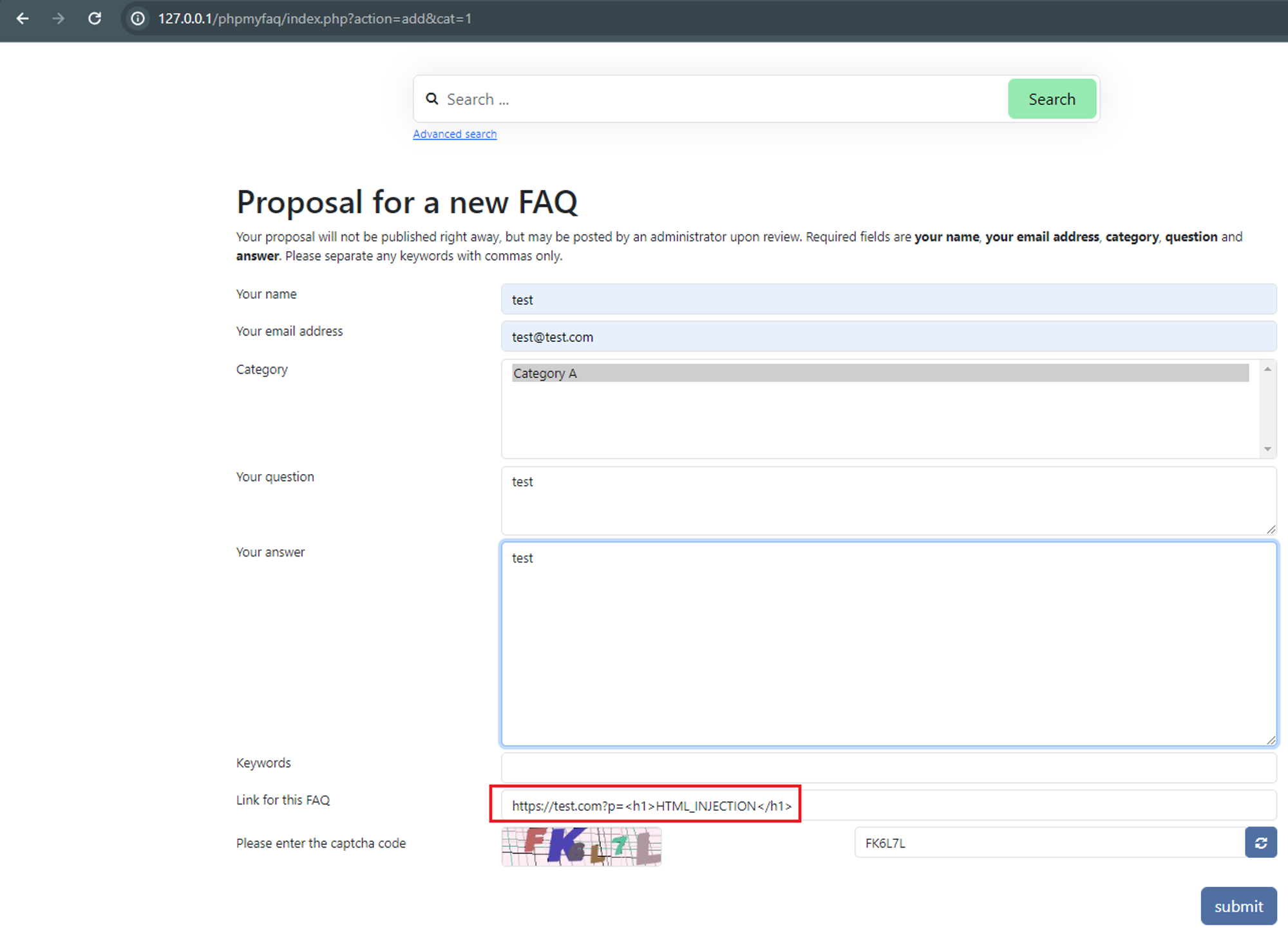 2. Verify the HTML injection by viewing the FAQ itself, “All categories” → “CategoryName” → ”QuestionName”. 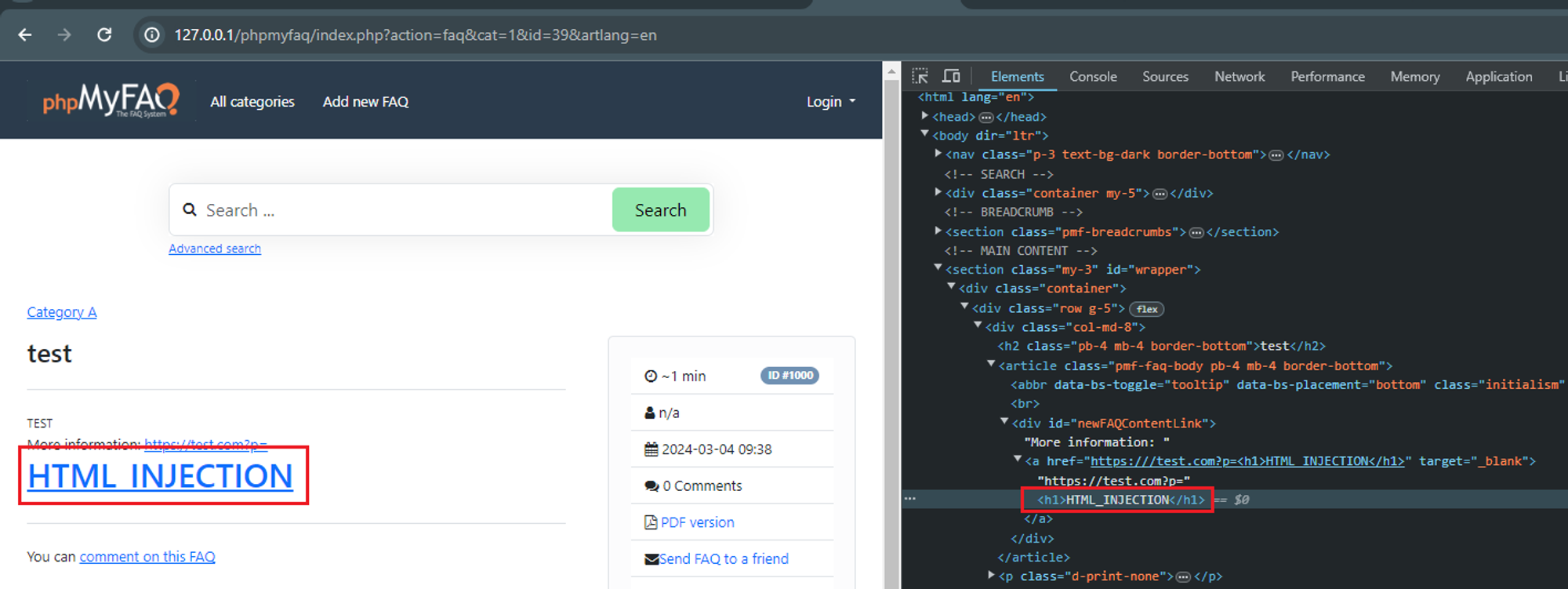 ### Impact Attackers can manipulate the appearance and functionality of web pages by injecting malicious HTML code. This can lead to various undesirable outcomes, such as defacing the website, redirecting users to malicious sites, or altering the content to deceive users. Additionally, unauthenticated HTML injection can compromise user privacy by displaying sensitive information or misleading content. It undermines the integrity of the application and erodes user trust, potentially resulting in loss of reputation and credibility.
auch bekannt als (4)
Weitere Namen und Kennungen dieser Entität.
quellen
Welche Quellen diesen Datensatz belegen und wann.
Referenzen (7)
Externe Belege — Patches, Meldungen, Analysen.
- https://cxsecurity.com/cveshow/CVE-2024-28108/cnnvd
- https://github.com/thorsten/phpMyFAQ/commit/4fed1d9602f0635260f789fe85995789d94d6634cnnvd
- https://github.com/thorsten/phpMyFAQ/security/advisories/GHSA-48vw-jpf8-hwqhcnnvd
- https://github.com/thorsten/phpMyFAQ/commit/4fed1d9602f0635260f789fe85995789d94d6634enisa_euvd
- https://github.com/thorsten/phpMyFAQ/security/advisories/GHSA-48vw-jpf8-hwqhenisa_euvd
- https://github.com/thorsten/phpMyFAQ/commit/4fed1d9602f0635260f789fe85995789d94d6634Patchnvd
- https://github.com/thorsten/phpMyFAQ/security/advisories/GHSA-48vw-jpf8-hwqhExploitVendor Advisorynvd
Angreifer nutzen Schwachstellen wie diese gegen im Internet exponierte Dienste aus. Sehen Sie mit einem kostenlosen Passiv-Scan, was exponiert ist.
Kostenloser Scan